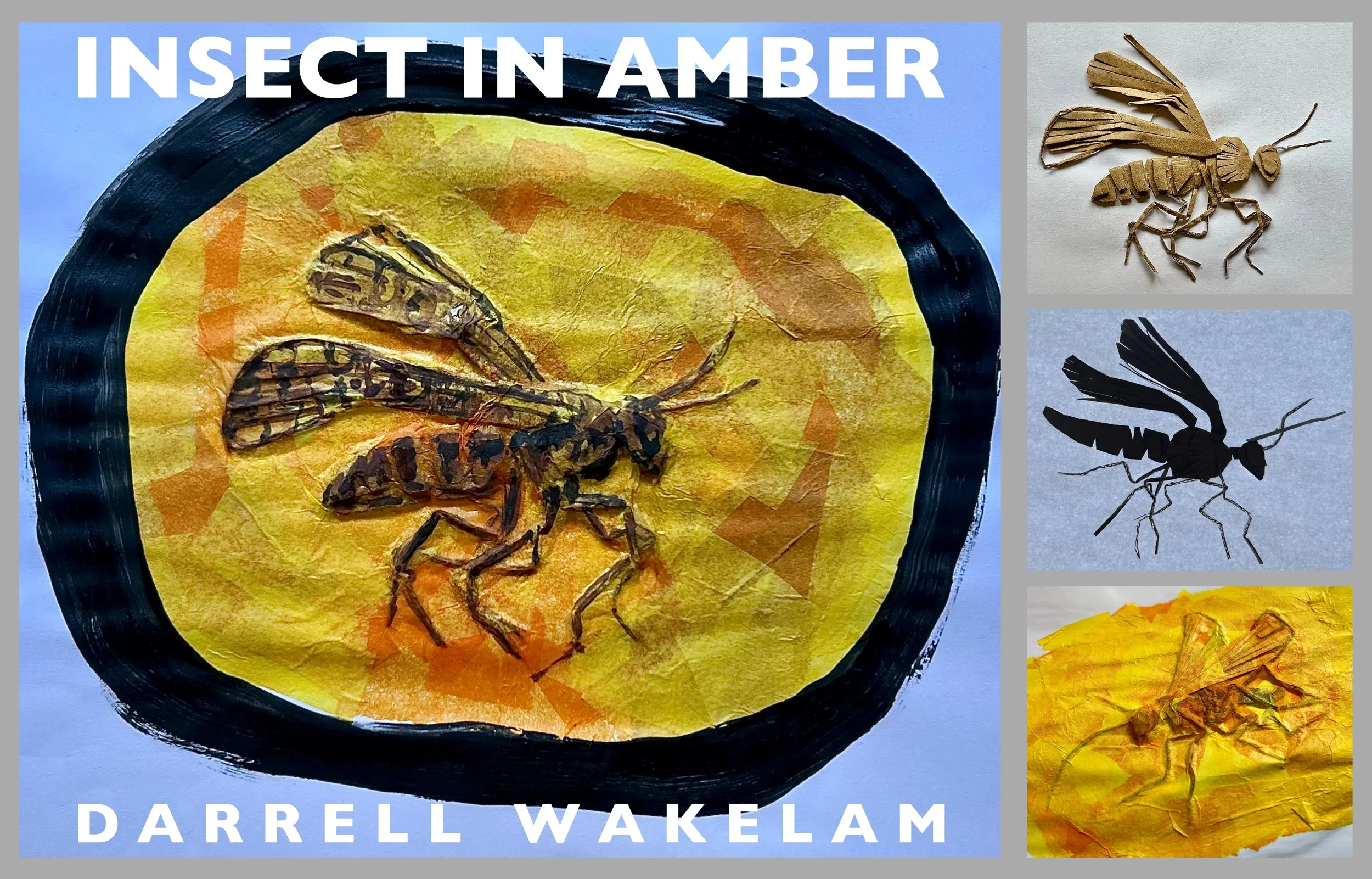
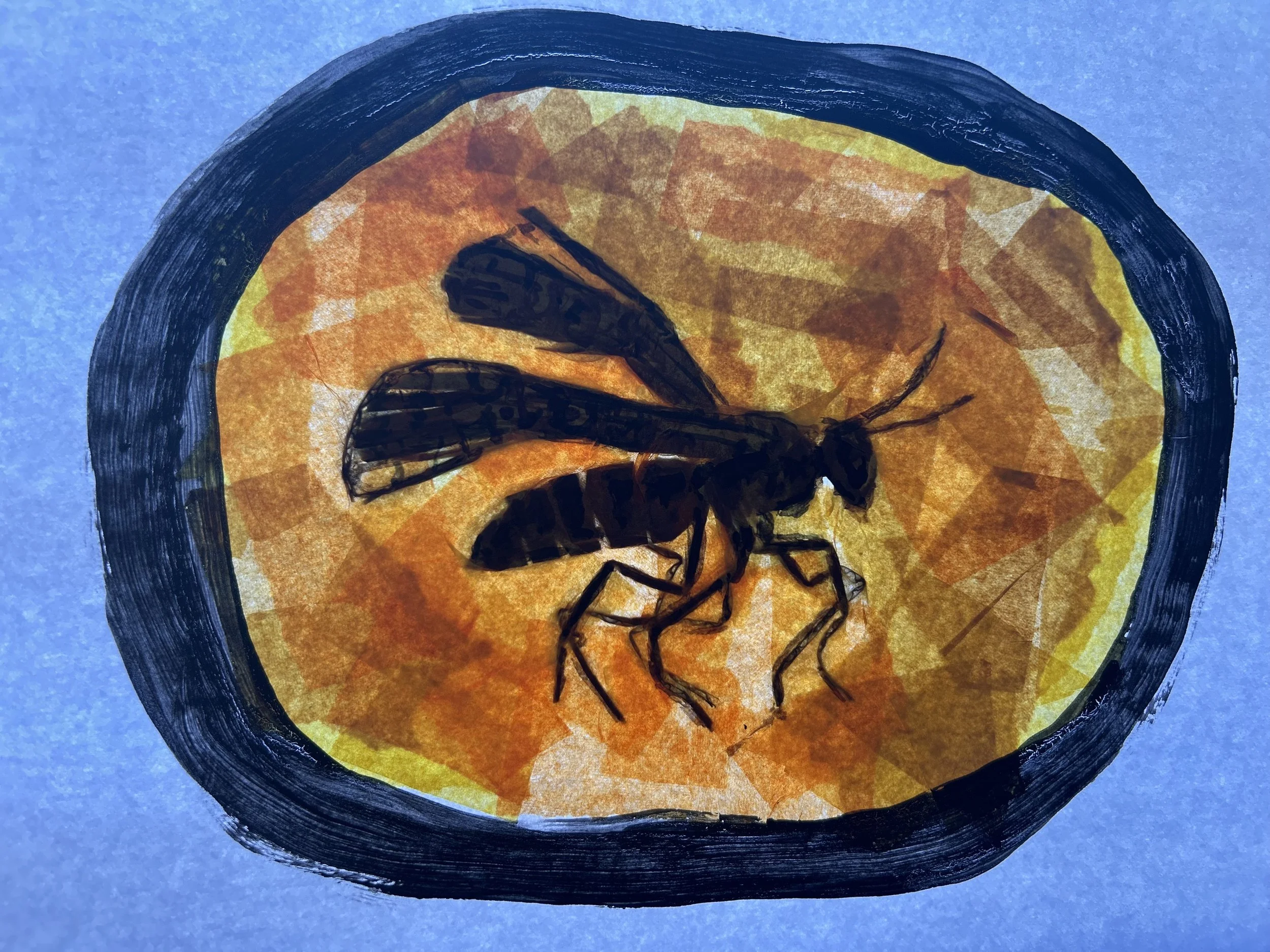
Insect in Amber
Did you know that Sir David Attenborough has his own collection of fossil insects trapped in amber?
Well, in honour of his 100th birthday I thought I’d take inspiration from these and make some, and here’s how . . .
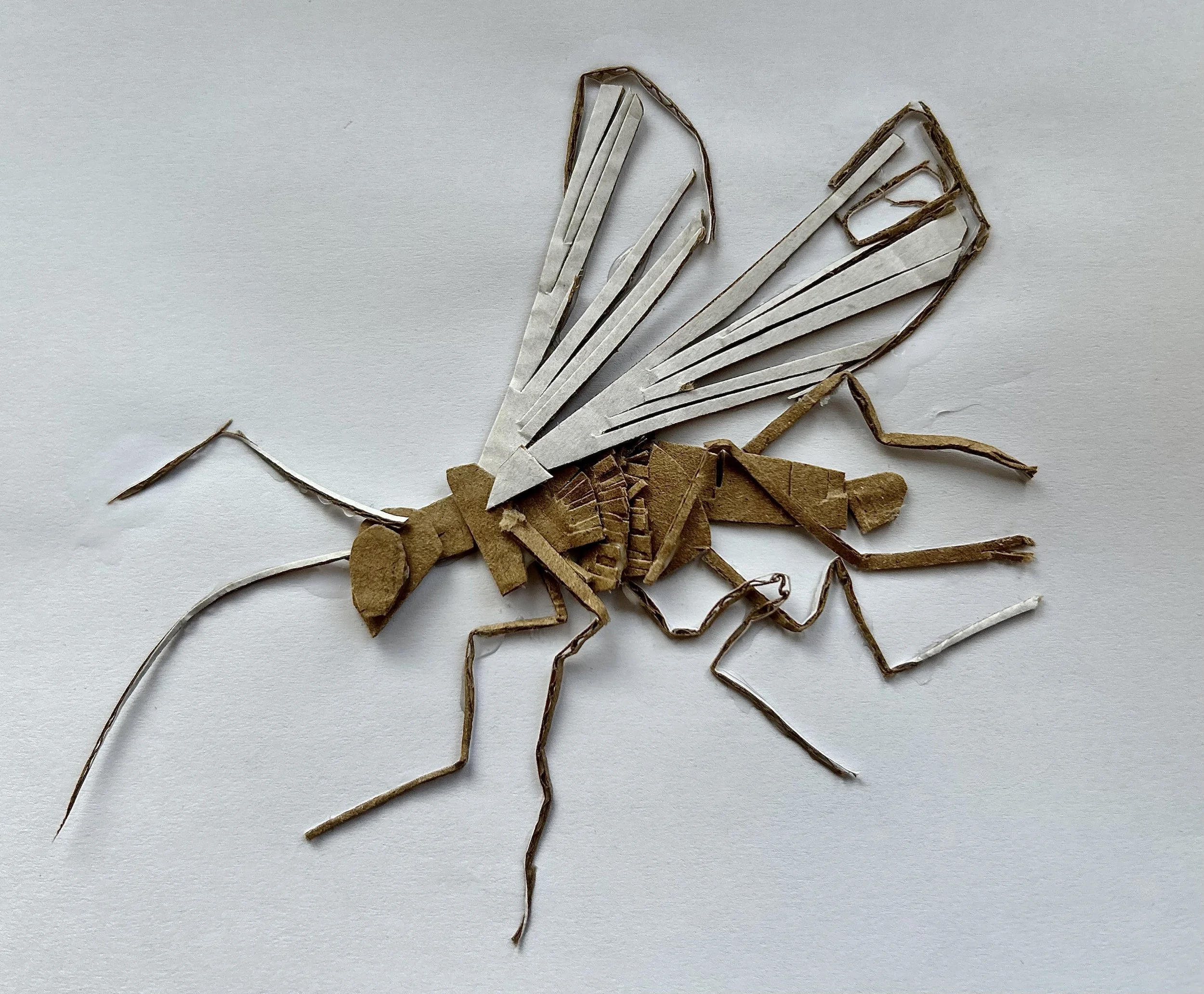
Cardboard Insect
For any insect like this, I first cut out some basic shapes. These could be simple geometric shapes to assemble for the body and head, thin strips for legs and antennae, or pieces that I’ve chopped back into to make textures, like the wings.
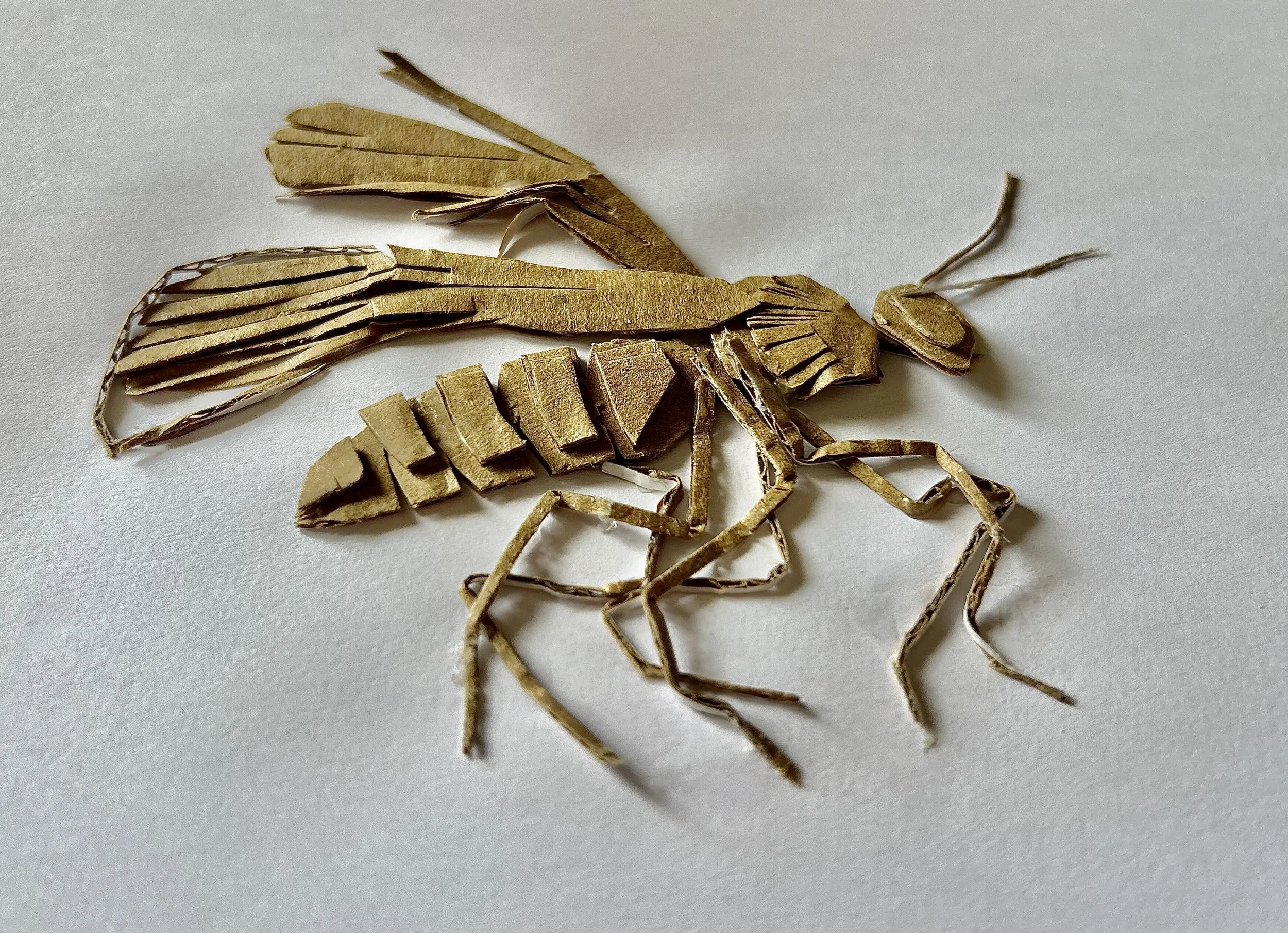
Layers and textures.
Often, I’ll push these shapes around for a while to see what works, maybe adding pieces, or altering their position or size. When I’m happy, I’ll glue them into place with PVA. For this project I glued the insects onto regular white photocopy paper as I wanted the background to be relatively transparent so that light could pass through it.
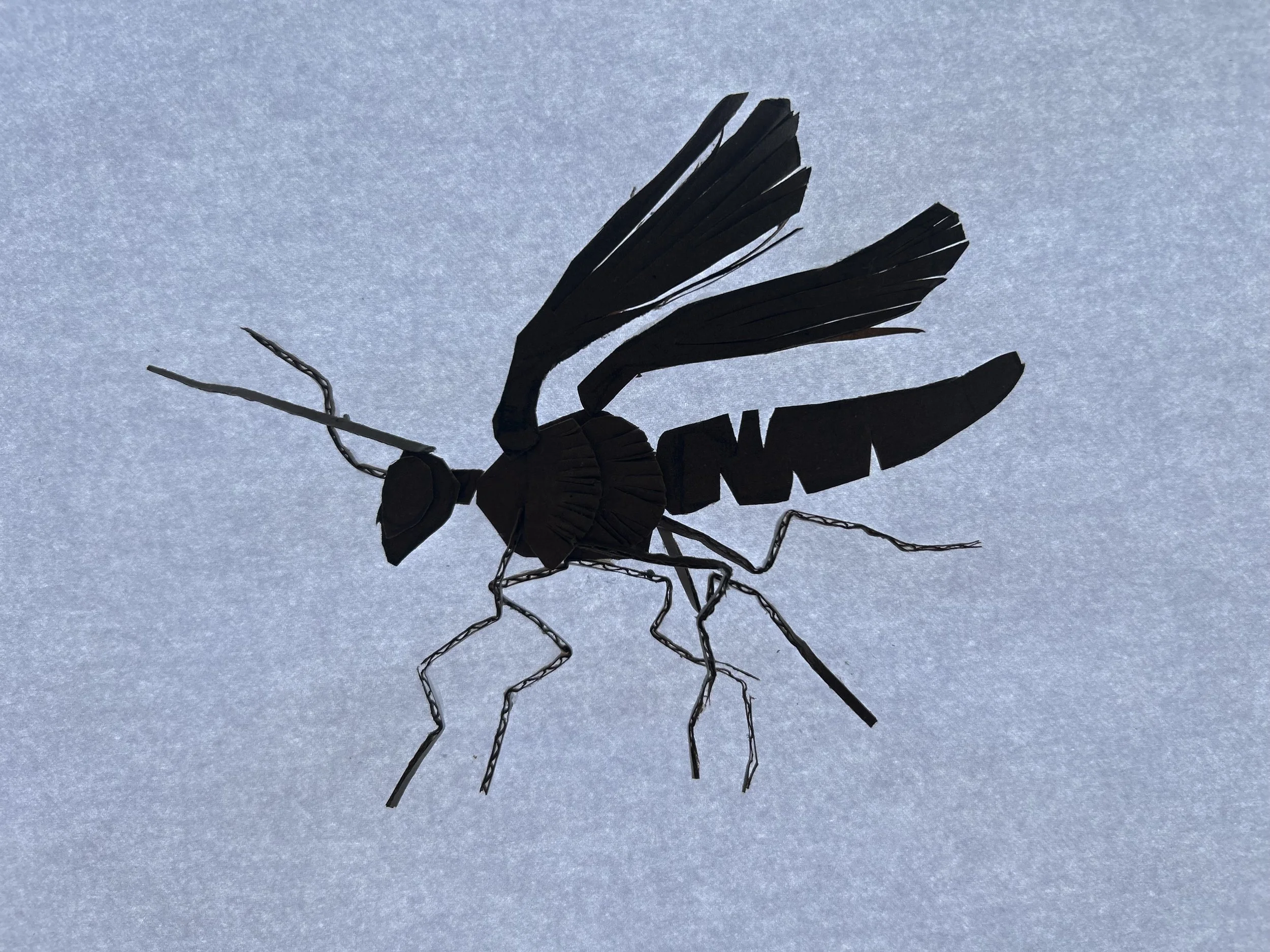
Light passing through the background paper producing a silhouette.
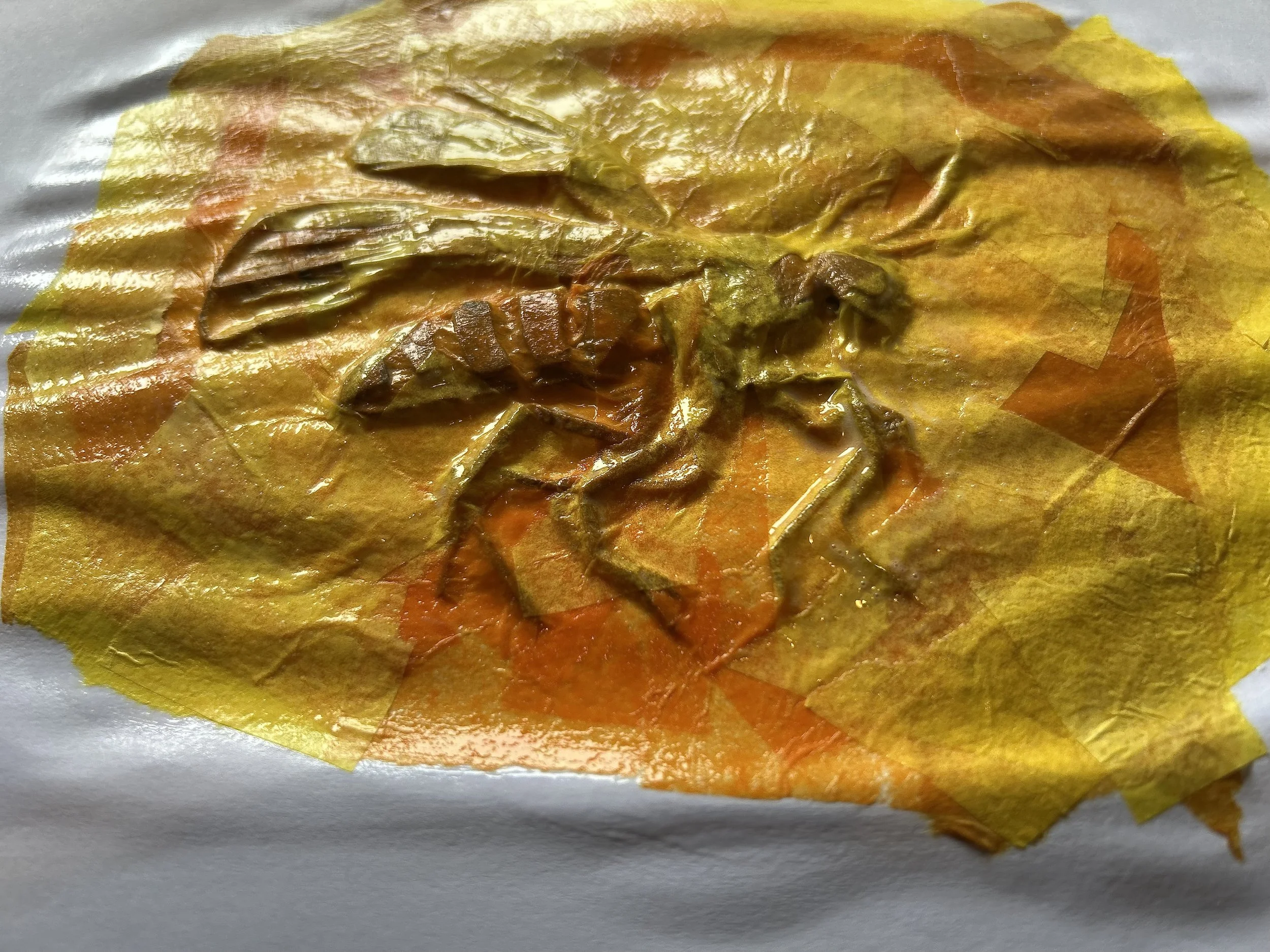
A thin layer of yellow and orange tissue paper.
To create the ‘amber’ colour I’ve pasted a thin layer of yellow and orange tissue paper over the top. This works best if you water down the PVA glue (50/50) and use a slightly stiffer brush to push the paper into all of the small gaps and spaces. The more care you give to that, the sharper the final design will be.
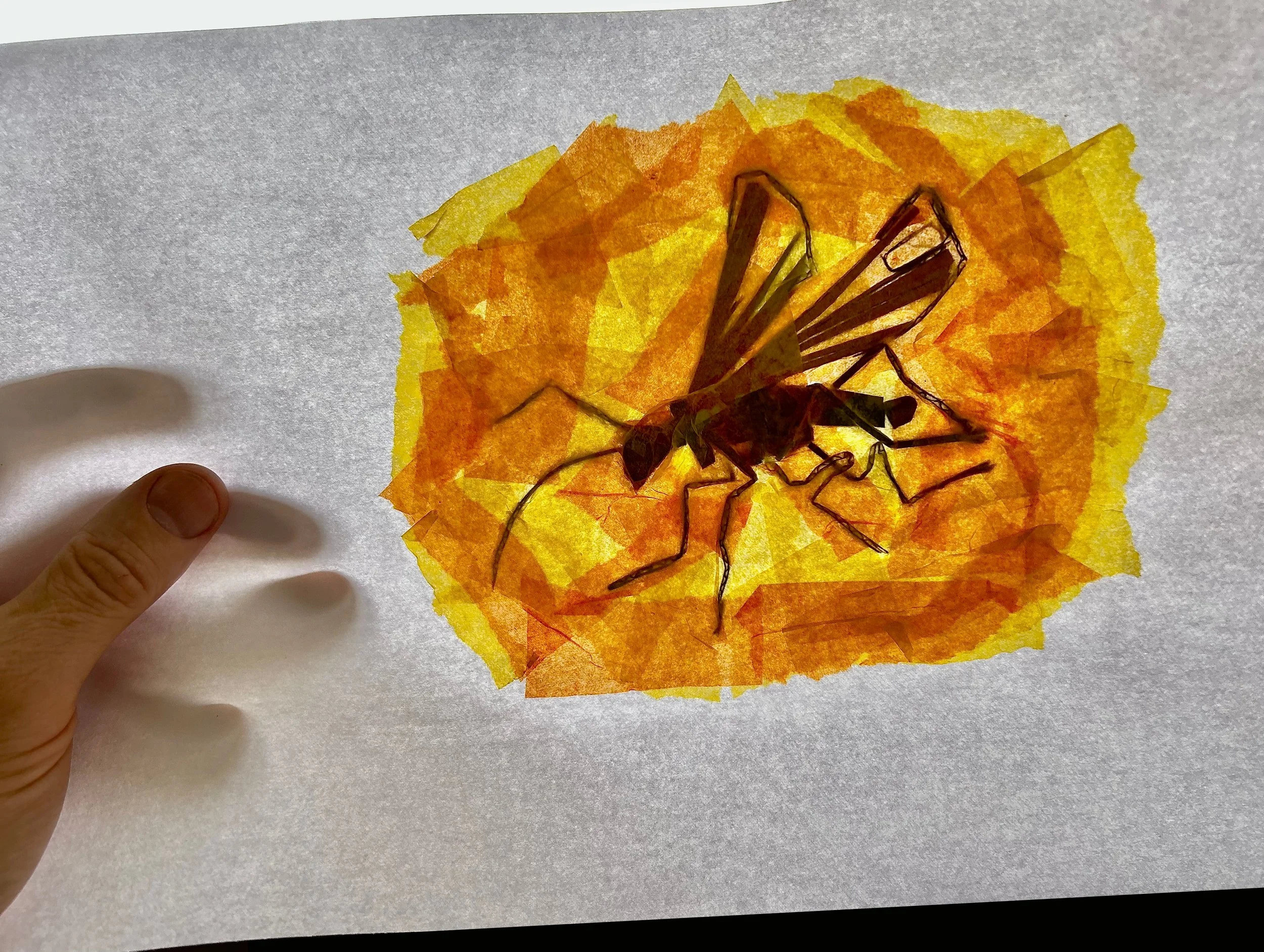
The dried tissue paper.
When the tissue paper dries it tightens slightly making the insect clearer, but it also stays transparent enough for light to pass through it. Now you can start to add the painted details.
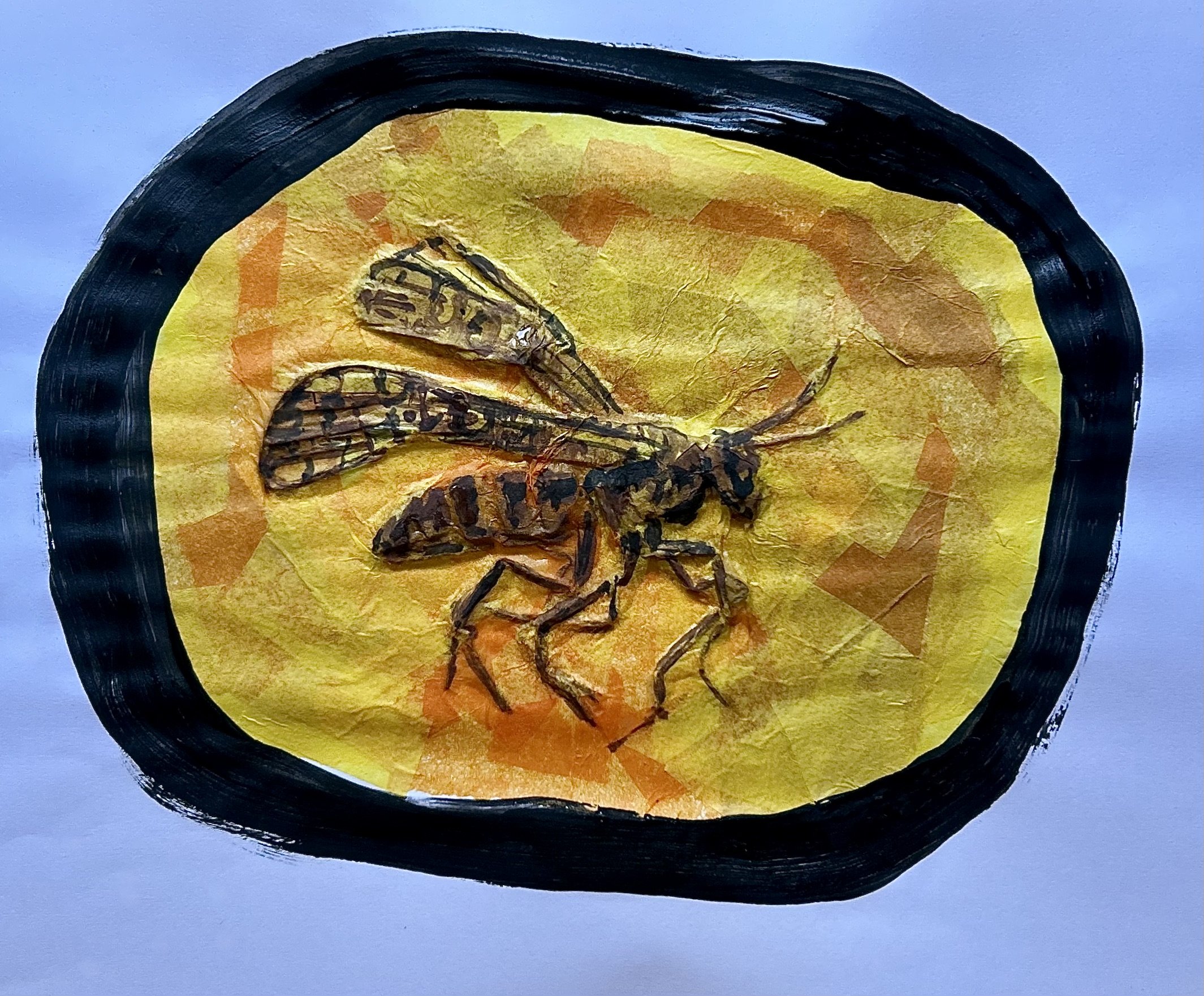
The final result.
I’ve used a small sharp paintbrush and mixed up some different shades of brown, adding some colour to the body, legs, and wings. Then I’ve used some black paint to introduce some really dark areas and patterns. To finish this off I’ve also used the black paint to create a bold, circular frame around the outside, giving the effect of a polished piece of amber.
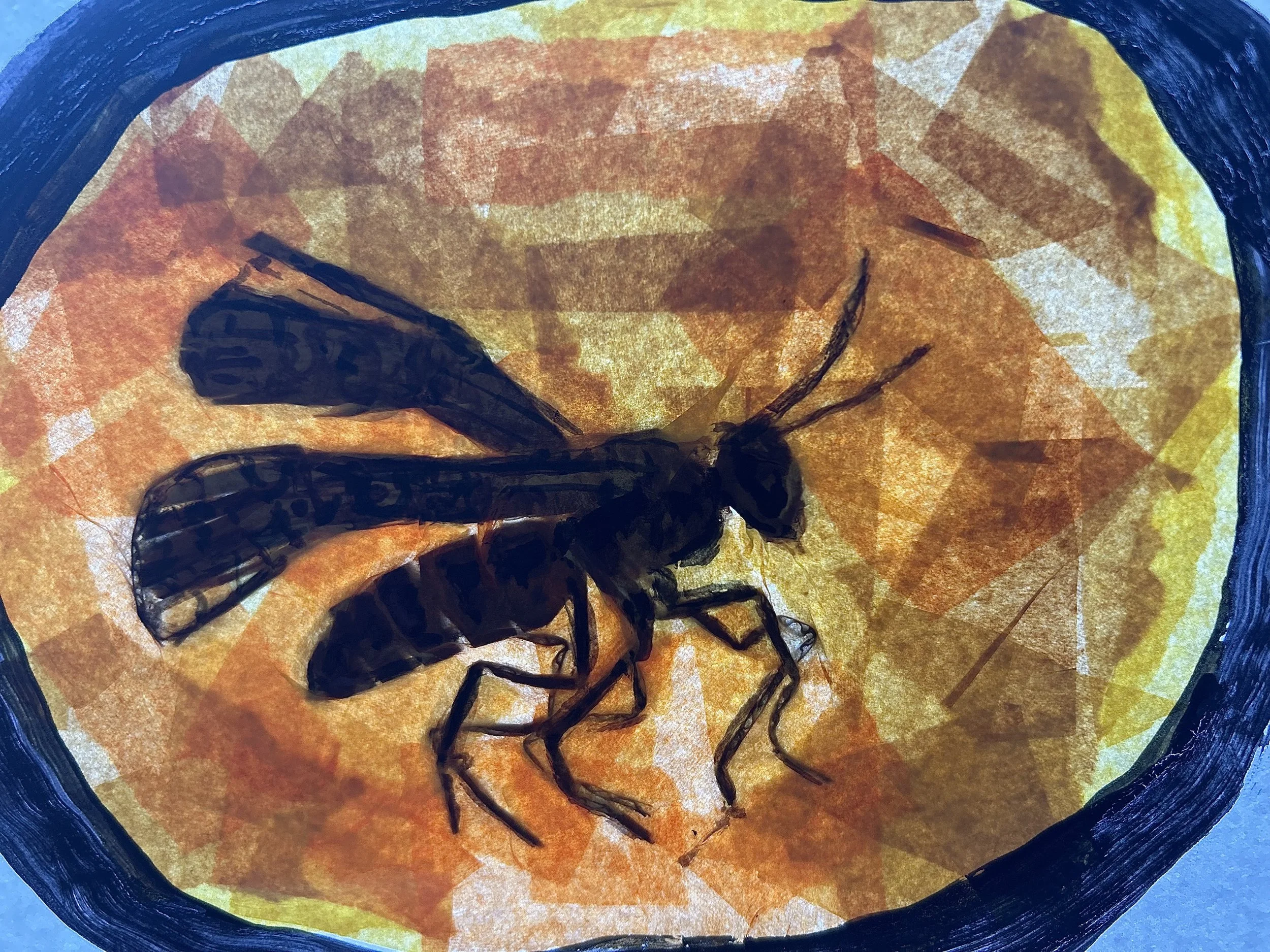
Hung up in front of a window.
If I was doing this with younger children I’d try drawing some insects first, show them how to break the design down into simple shapes and look carefully at close-up photos of different insects. I’d also do the initial making process in stages, make a body and head, then add some wings, then create the legs . . . just a simple step-by-step method like that will really help them. After that, it’s all pretty straightforward . . . enjoy.